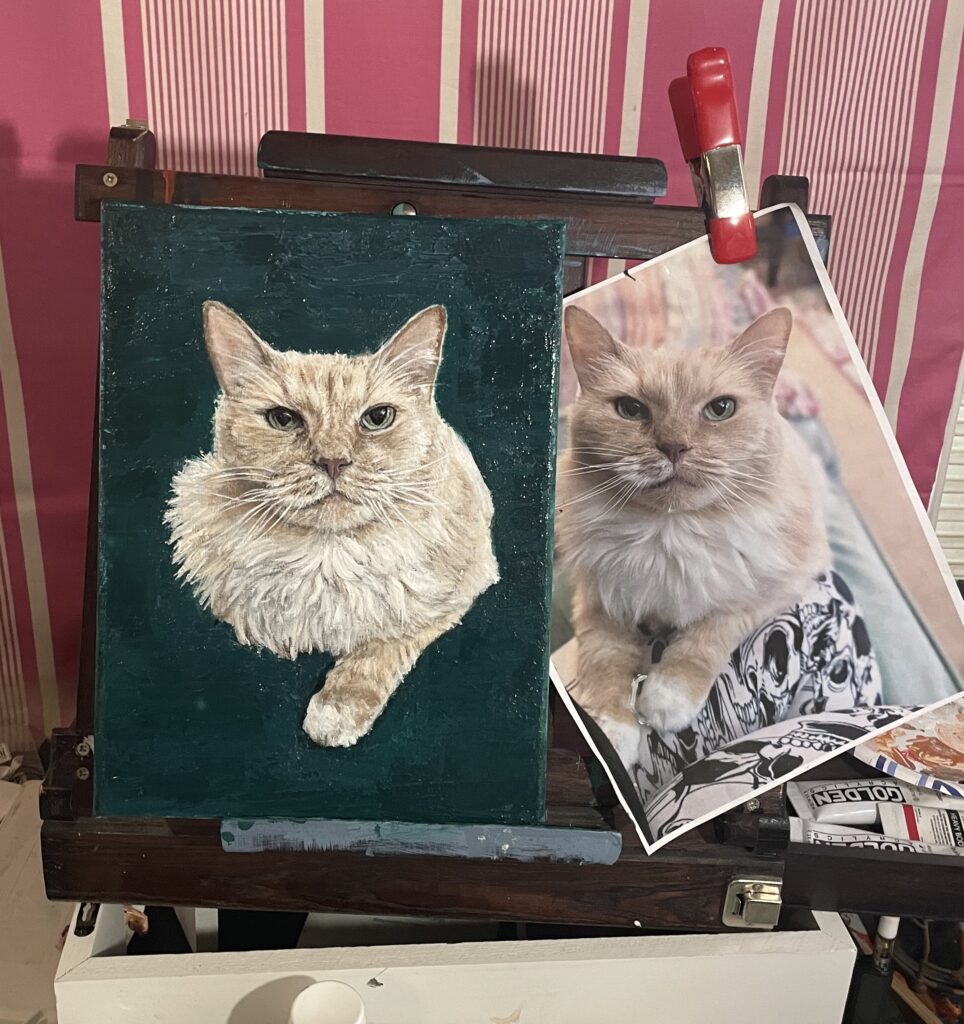
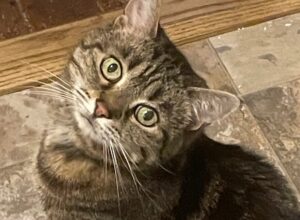
A good portrait requires a good photo. The lighting, the angle, and the expression on the animal’s face can all dramatically change how your animal is represented. As the artist, I can only depict what I am able to see, so a good photo is vital!
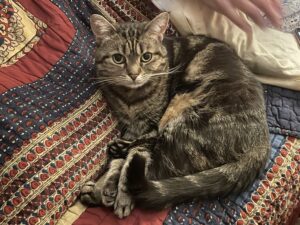
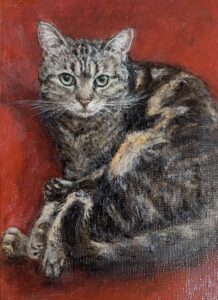
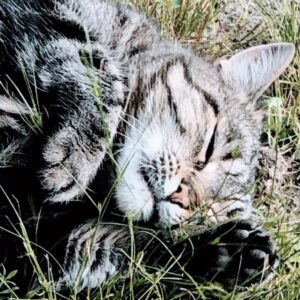
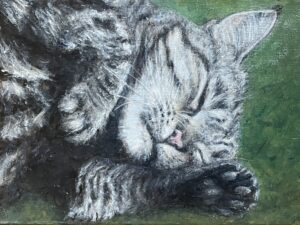
Below are examples of three photos and their subsequent paintings. These portraits are all of the same cat but the environment and poses led to very different representations.
Example #1 – Full body, with dark red background and shadow.
I may crop or rotate a photo to improve the composition for the painting.
Example #2 – Head & shoulders, (ear cut off), with light blue distressed background.
Multiple reference photos helps me capture the personality as well as the likeness. And helps me ensure all markings are accurate.
Example #3 – Close up, face & paws, green grasslike (blurred) background.
The background can reflect the environment in the photo or be created to match your decor.
Mainly, you want to make sure that all the elements you would like in your painting are included in the photos you provide.*
*I understand that photos of pets who have already passed may be limited. I will strive to create a portrait from any available photos, and communicate if I feel I cannot do your pet justice.